

Editorial strategy
Choose audiences, themes and formats: guides, interviews, comparisons or themed features.
SEO content writing and content marketing: expert articles, business blog content and editorial features that answer customer questions.
SEO Content Marketing & Expert Articles
SEO content marketing helps buyers understand your product before they contact sales. We develop expert articles, comparisons and business blog content around search intent and your team’s experience. Each piece answers a specific question and gives readers a relevant next step, with topics, facts and publication channels agreed before release.
Translate team experience into accessible examples and useful insights.
Introduce the offer where it helps the reader’s task.
Plan updates, internal links and useful ways to repurpose the material.
Solution concepts
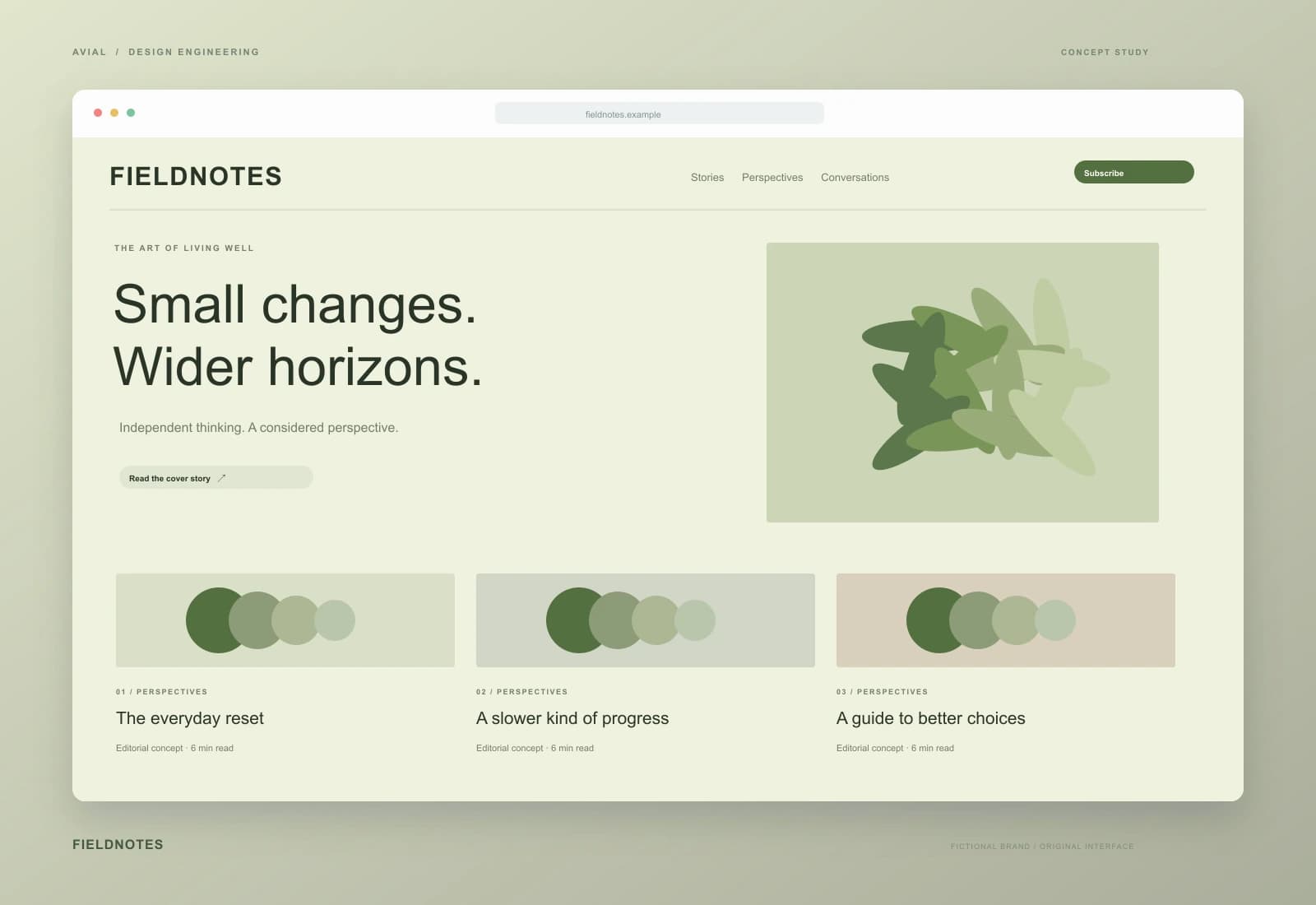
Useful stories around a brand
A content ecosystem concept for a lifestyle brand. Editorial stories answer real audience questions, while curated topic collections create a useful path toward products and services.
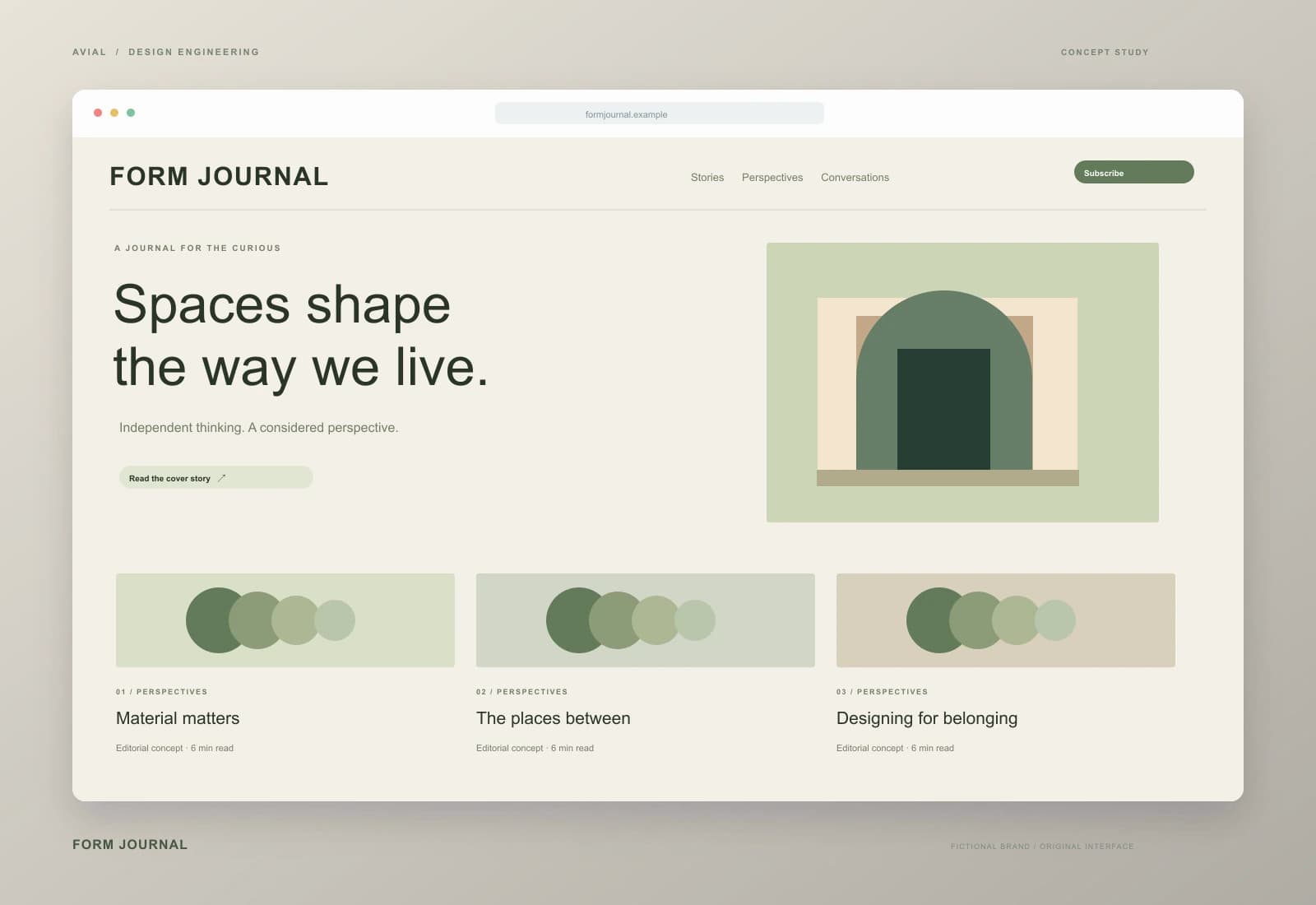
Expertise people want to read
An architecture and design journal concept. Interviews, material studies and practical guides form an interconnected knowledge library with a distinctive editorial voice.
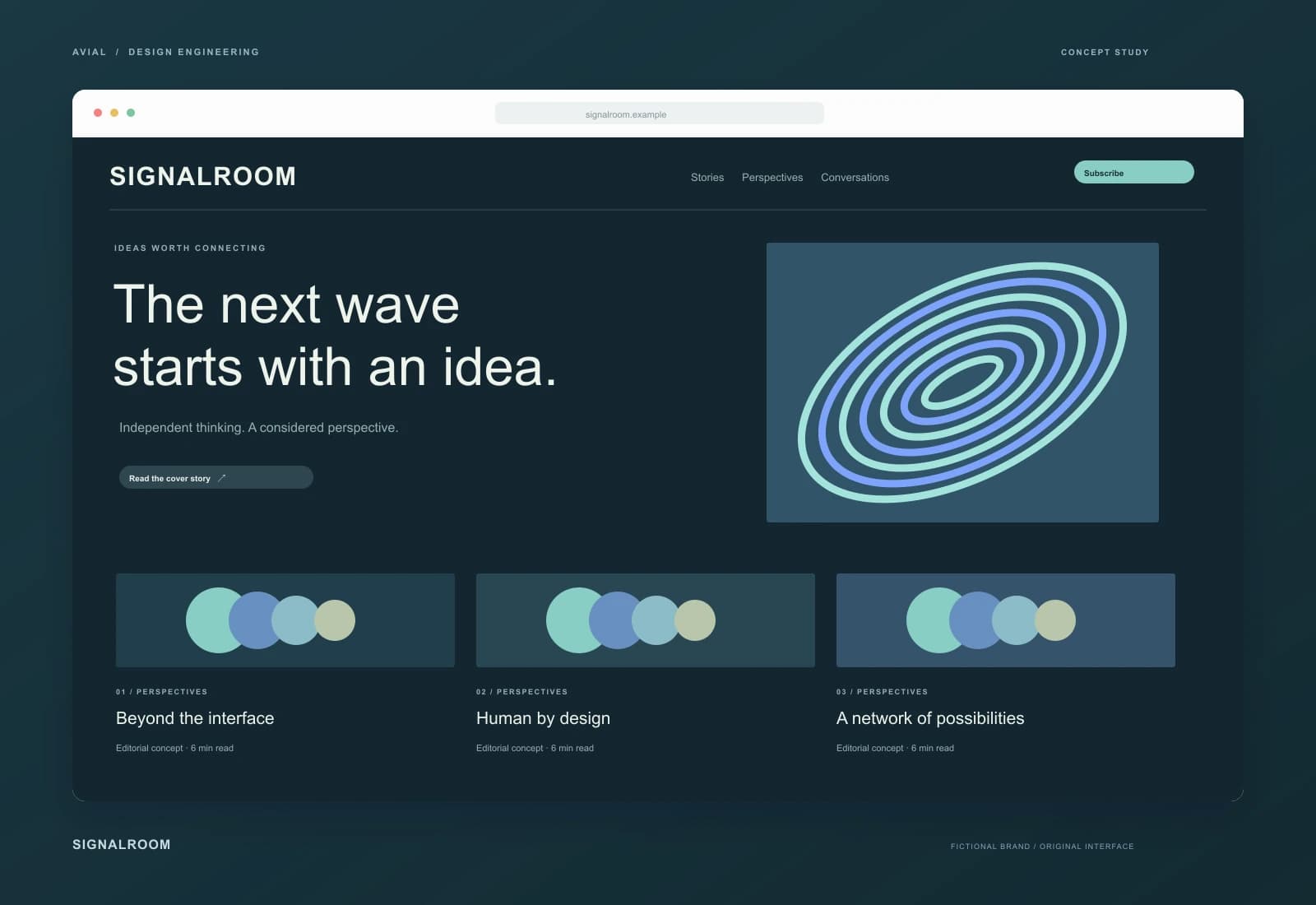
Complex technology. Clear stories.
A technology media concept combining analysis, interviews and a focused newsletter. Stories explain product value through people’s challenges, rather than a list of features.
Original concepts for fictional brands, illustrating our approach to design and implementation.
What you get
Choose audiences, themes and formats: guides, interviews, comparisons or themed features.
Interview experts, check facts and agree which claims can be published.
Develop structure, edited copy, illustrations and routes to related resources.
Agree the channel and disclosure, tag links and review available reading and referral data.
A strong expert article lets prospective customers experience your approach before a conversation. Explain choices, discuss nuances and leave the reader with something practical.
Our service combines search intent with useful, expert-informed explanations of your product. It can include buyer guides, comparisons, practical tutorials and expert answers. The local term native SEO describes this editorial approach; it is not a separate Google algorithm or ranking mechanism.
B2B and technology buyers need to understand implementation, limitations and trade-offs. Interviews with your specialists turn that knowledge into accessible articles. Readers should understand who the product serves and when a different solution may be more appropriate.
Owned-site content, publisher outreach and paid native advertising are different deliverables. This engagement centres on approved editorial material. External publishing, digital PR and link building require their own scope, terms and budget.
Define the reader, buying stage, search intent and page purpose. Review existing content to prevent overlap. The brief includes the questions to answer, structure, required sources and a useful next step for the reader.
Collect specialist answers, documentation and examples you have permission to publish. Separate evidence from assumptions. We do not invent bylines, testimonials, customer outcomes or first-hand product experience.
Approve copy, headings, illustrations and internal links. Check mobile readability and presentation. Record the update date, fact owner and maintenance terms in the editorial plan so published claims can be kept accurate.
An illustrative framework for a CRM buyer guide. These rows demonstrate the work, not a client case study or a recommendation of a particular product.
| Buyer question | Evidence required | Article deliverable |
|---|---|---|
| Will it connect to our phone system? | Integration documentation and a verified workflow | Connection requirements, limits and supported data |
| What makes up the budget? | Confirmed licence, migration, training and support costs | A cost-component table with a verification date |
| When is the product unsuitable? | Business requirements and known constraints | Selection criteria and questions for a product demo |
Scope depends on subject complexity, interviews, source availability, research, illustrations and languages. The proposal identifies article count, format, approval stages and revision rounds. Publishing, localisation and external expenses are separate items where required.
Your team supplies business context, access to a specialist and confirmation of product claims. We agree on rights to copy and illustrations, confidentiality and final approval before work starts. Localisation adapts terminology, buyer questions and actual product conditions for each market.
Each article has a purpose: explain a problem, support comparison or lead to a relevant consultation. We review search queries and clicks, onward visits to service pages and inquiries where tracking allows. An informative article does not need to convert every reader immediately.
Reports distinguish publication, indexing and observed outcomes. Content is reviewed when facts, the product or audience questions change. Incomplete attribution is disclosed; we do not claim sales without evidence or guarantee rankings and AI recommendations.
From brief to launch
Connect audience questions with team experience.
Conduct interviews and prepare an editorial outline.
Review copy, visuals and product references.
Review the response and choose useful follow-up stories.
Before we start
The story should be useful on its own. Commercial involvement is disclosed in the agreed format, without presenting advertising as an independent recommendation.
Yes, with input from your expert. We shape structure and clarity, while reviewing specialist facts with your team.
In your blog, on a dedicated landing page or through a relevant external publisher, depending on the audience, objective and terms.
We start with the reader's question and actual expertise. Search language helps organise the article but cannot replace useful information. The deliverable is a grounded answer with a relevant route to your product.
The core scope covers agreed editorial materials. Publisher research, outreach and placement are added separately. Independent editorial acceptance cannot be guaranteed.
Yes. We review intent, factual accuracy, topic overlap and internal links. Useful sections are retained. Rewrites or consolidation need a documented reason and approval of any URL changes.
You nominate a specialist to confirm claims about your product. External facts are supported with sources. Bylines and experience claims use real, approved information only.
Assistive tools may support outlining or drafting within the agreed process. Published work receives human editing and factual review. Confidential information is not shared without agreement.
Yes. We review local terminology, intent, sources and product conditions. A literal translation may miss another market's questions, so adaptation has an explicitly agreed scope.
The plan identifies an owner and review triggers such as pricing, feature or requirement changes and outdated examples. One-off production and ongoing editorial maintenance are separate scopes.
AVIAL SERVICE
Share a topic, product or recurring customer question and we will suggest an editorial angle.
Tell us about your website and goal. We will clarify the scope, cost and next step. An inquiry does not commit you to a purchase.
Estimate IT service costs, book a consultation and try an enquiry automation example. Use the website check to start a discussion about technical SEO and page speed.