

Search demand research
Group queries by intent, region and product. Identify topics that connect competing offers with potential customers.
SEO services for business and ecommerce websites: audits, keyword research, on-page optimization and organic enquiry analysis.
SEO Services for Business Websites
Our SEO services connect the questions customers search for with pages that help them choose. We start with a website SEO audit and keyword research, map search intent to landing pages and agree on priorities. Ongoing search engine optimization combines content, technical improvements and internal linking, with reporting on visibility, qualified visits and enquiries.
Site structure follows customer intent and business priorities.
Improve content, navigation and the visitor’s next step.
Track relevant traffic and enquiries alongside search visibility.
Solution concepts
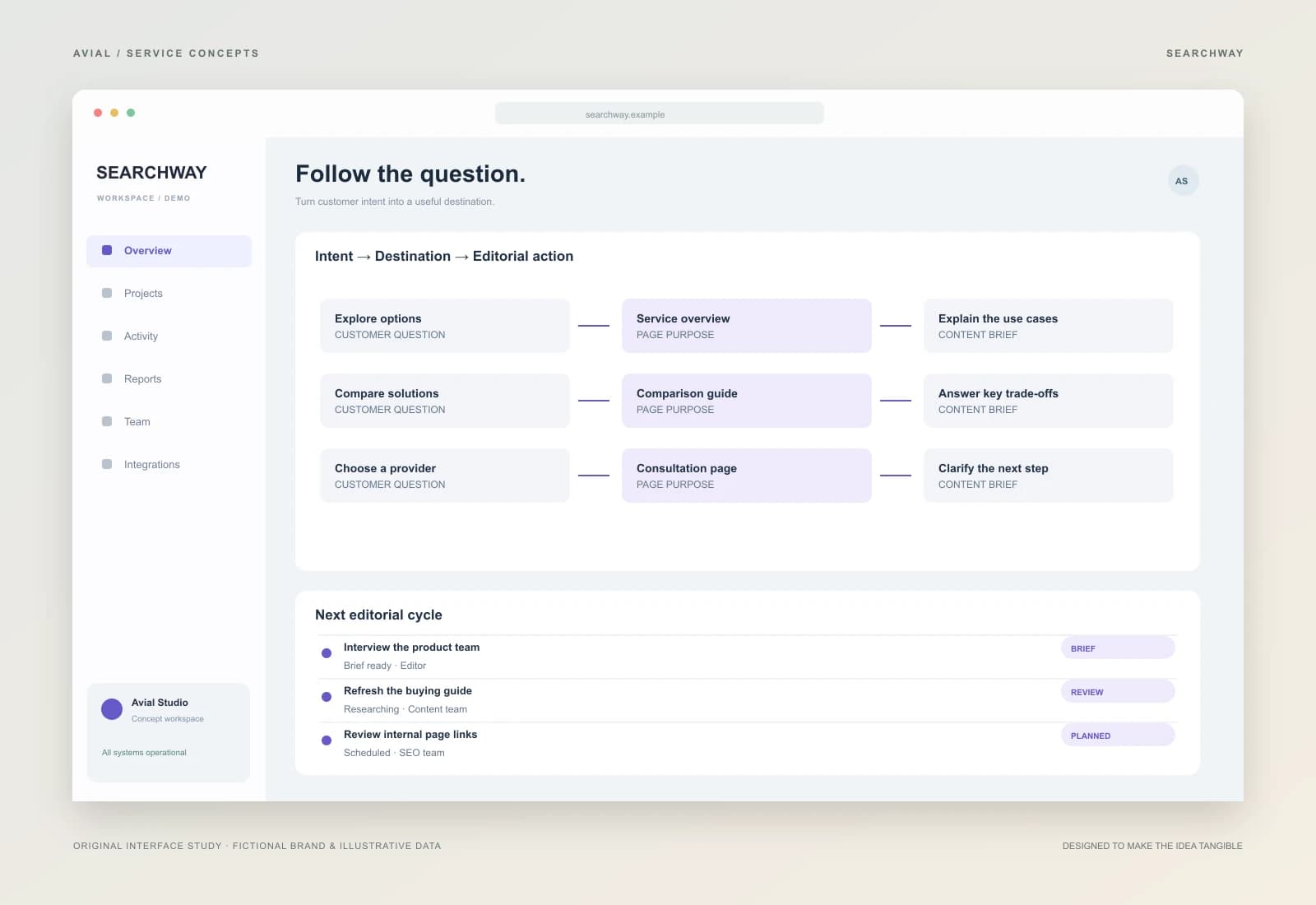
An organic demand map
An SEO planning concept connecting customer intent with landing pages, editorial briefs and owners.
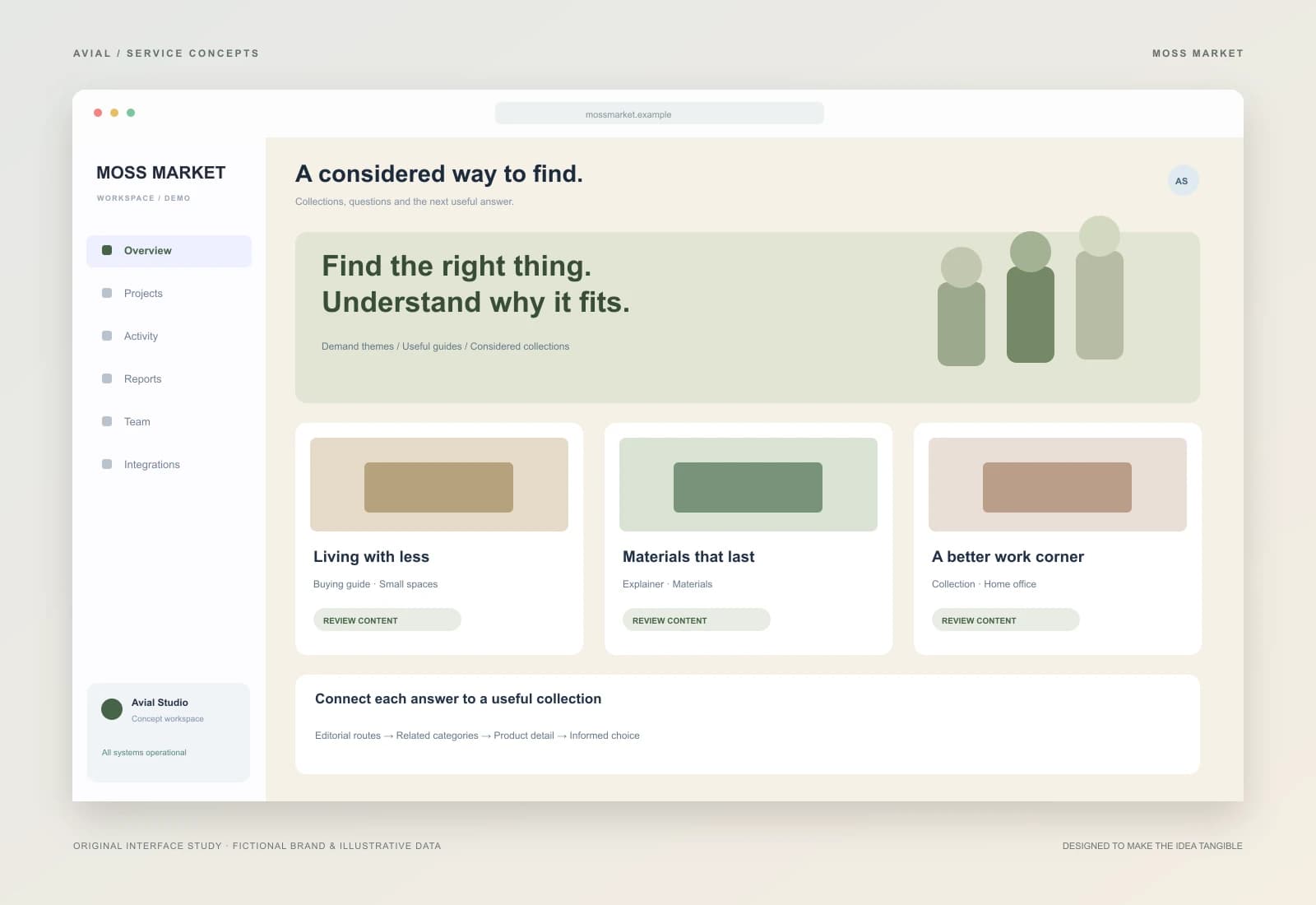
Search that supports a thoughtful purchase
A commerce content strategy concept joining categories, buying guides and seasonal themes into a path from a question to a relevant product.
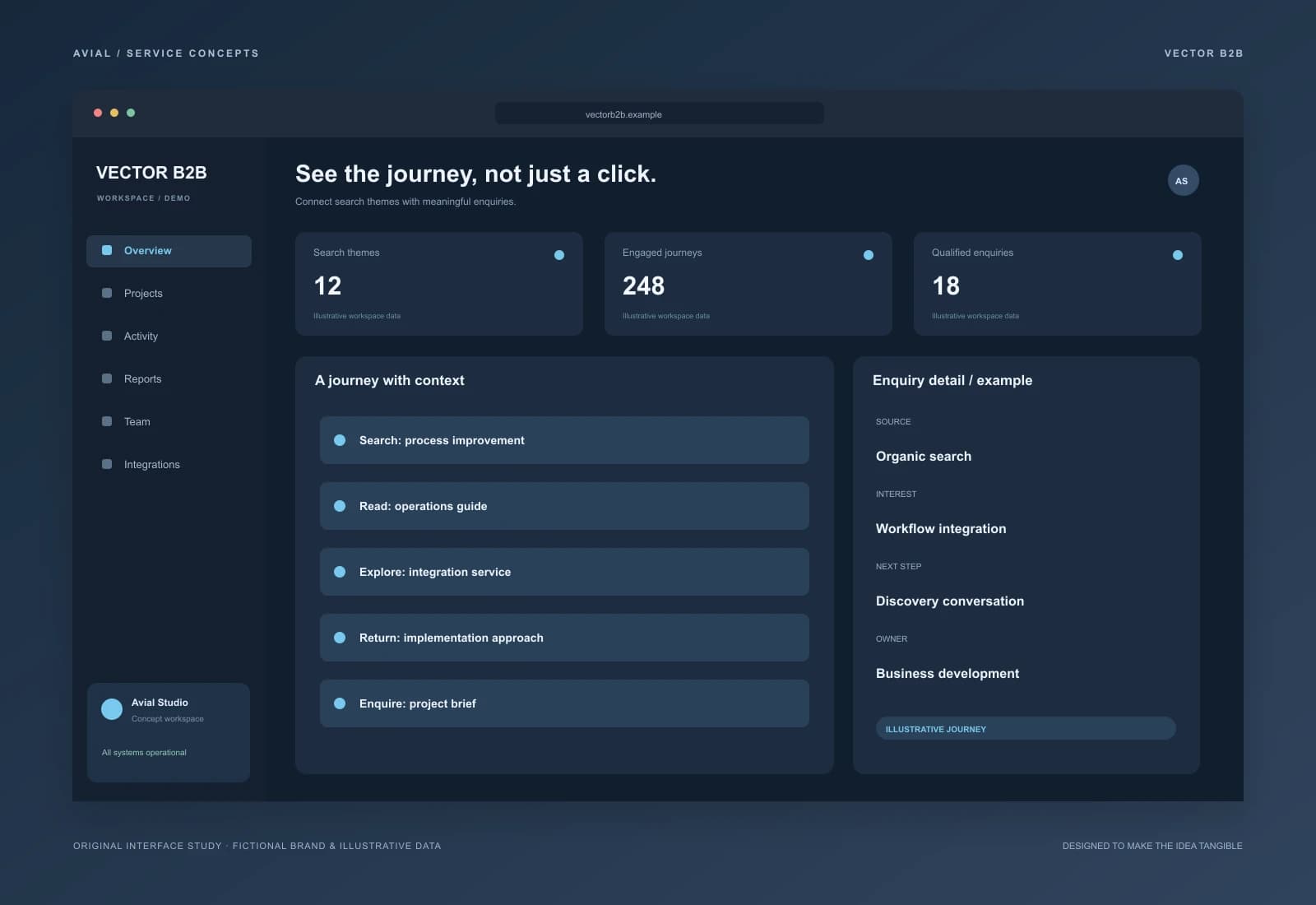
From search to a meaningful enquiry
A B2B measurement workspace concept linking demand themes, engaged pages and enquiries with source context.
Original concepts for fictional brands, illustrating our approach to design and implementation.
What you get
Group queries by intent, region and product. Identify topics that connect competing offers with potential customers.
Plan landing pages, editorial briefs, internal links and metadata improvements.
Identify crawling and indexing obstacles, coordinate engineering work and verify changes.
Define enquiry events, compare page performance and revise priorities using observed data.
A useful landing page helps someone choose: it explains the offer, constraints, process and next step. Search strategy therefore connects with content and usability, rather than mechanical keyword repetition.
We connect categories and product pages with buying and comparison intent. The review identifies which filters deserve searchable pages, duplicate URLs and unavailable products. Priorities take account of your range, commercial value and ability to fulfil orders.
We organise pages around customer needs, actual delivery areas and service conditions. Location pages should explain meaningful local details. Producing identical pages with different city names is not our approach to local SEO.
We cover selection criteria, integrations, limitations and implementation. Service pages connect with comparisons and expert explanations. Lead quality is reviewed with your sales team: a visit alone does not establish a qualified business opportunity.
You receive a prioritised issue and opportunity map, target URLs, search demand analysis and an action plan. Each task identifies its evidence, owner and acceptance criterion. Your own team can implement the recommendations.
Once access is available, we record the baseline, group queries, map them to pages and agree priorities. Deliverables include the landing page map, editorial and technical briefs and a planned change register. The proposal defines the first month's scope.
We implement agreed changes, validate published pages and review priorities against observations. Reports separate delivered work, measured changes and next steps. Development, content production and external publications are itemised when included in scope.
Illustrative tasks for a hypothetical service website. This demonstrates an audit deliverable; it is not a client case study or a forecast of growth.
| Observation | Proposed action | Acceptance criterion |
|---|---|---|
| Two pages answer the same buying question | Review intent and evidence; clarify their roles or agree consolidation | Each cluster has a target URL; links and redirects have been checked |
| A service page omits delivery conditions | Add scope, limitations and expert answers | Facts are approved and the next step is clear |
| Enquiries cannot be linked to their source | Check the conversion event and source transfer to the CRM | One test enquiry is recorded once with the agreed fields |
Scope depends on website condition, service areas, languages, markets, catalogue complexity and your delivery team. A proposal separates the audit, ongoing work, content, development and external costs. A keyword count alone does not define a useful business deliverable.
For an estimate, share your website, priority products, target markets and commercial goals. At kickoff, we agree Search Console and analytics access, subject experts, implementation owners and approval deadlines. Your team receives the agreed tasks, materials and available reporting data.
Branded and non-branded queries, landing pages, countries and devices are analysed separately. We compare suitable periods while accounting for seasonality, product changes and tracking quality. The change log records implementation dates so earlier growth is not attributed to later work.
Reports review Search Console impressions and clicks, organic visits, enquiries and lead quality where analytics and CRM data allow it. Ranking observations provide additional context. Attribution gaps are disclosed, and demand forecasts are not presented as guaranteed revenue.
From brief to launch
Clarify products, regions and what makes an enquiry valuable.
Connect demand with existing pages and missing answers.
Agree content and technical work for the next cycle.
Report changes, observations and the next actions.
Before we start
Timing depends on the site, competition and implementation pace. The audit defines milestones and early signals; specific rankings and dates are not guaranteed.
No. Keep useful content and improve pages with a clear opportunity first. New material should answer a real unmet need.
Yes. We can brief your editors and developers, agree acceptance criteria and review implementation.
We first review the website, priorities, markets and implementation resources. The proposal itemises delivery and external costs. A universal price without a defined scope does not explain what your team will actually receive.
The agreed opening cycle covers baseline data, priority page audits, query mapping and an implementation plan. Page and task volumes are specified before work begins, taking access and approval deadlines into account.
Yes. Work can start with structure, search intent and technical accessibility. A new website still needs substantive content and time to accumulate observations. The plan accounts for its lack of historical data.
Yes. We review categories, products, filters, duplicate URLs and stock changes separately. The team agrees which pages should be indexed and checks how technical changes affect purchasing and navigation.
We can brief your team or include content production and development in the proposal. Owners, review rounds and acceptance criteria are agreed before delivery starts.
Yes. They share useful content, search accessibility and verified facts. Google organic clicks and AI answer mentions remain separate measures; performance in one channel is not used as a substitute for the other.
Your team receives agreed materials, page maps, the delivery log and recommendations. Your accounts remain under your control. File handover and unfinished tasks are covered in the engagement terms.
AVIAL SERVICE
Share your site, main offers and target regions. We will suggest a starting point for the review.
Tell us about your website and goal. We will clarify the scope, cost and next step. An inquiry does not commit you to a purchase.
Estimate IT service costs, book a consultation and try an enquiry automation example. Use the website check to start a discussion about technical SEO and page speed.