

Structure and prototype
Map the audience and pages, then validate the main journeys before visual design.
Corporate website, ecommerce and custom web application development with a CMS, search-ready structure and CRM integrations.
Website & Web Application Development
Business website development starts with the visitor’s task: choosing a service, buying a product or using a customer portal. We build corporate websites, ecommerce stores and custom web applications around those journeys. Scope includes agreed design, content responsibilities and integrations, with CMS access and team instructions at handover.
Each page answers a visitor question and offers a relevant next step.
Update copy, services and case studies through a practical administrative interface.
The architecture anticipates the sections, languages and integrations your business needs next.
Solution concepts
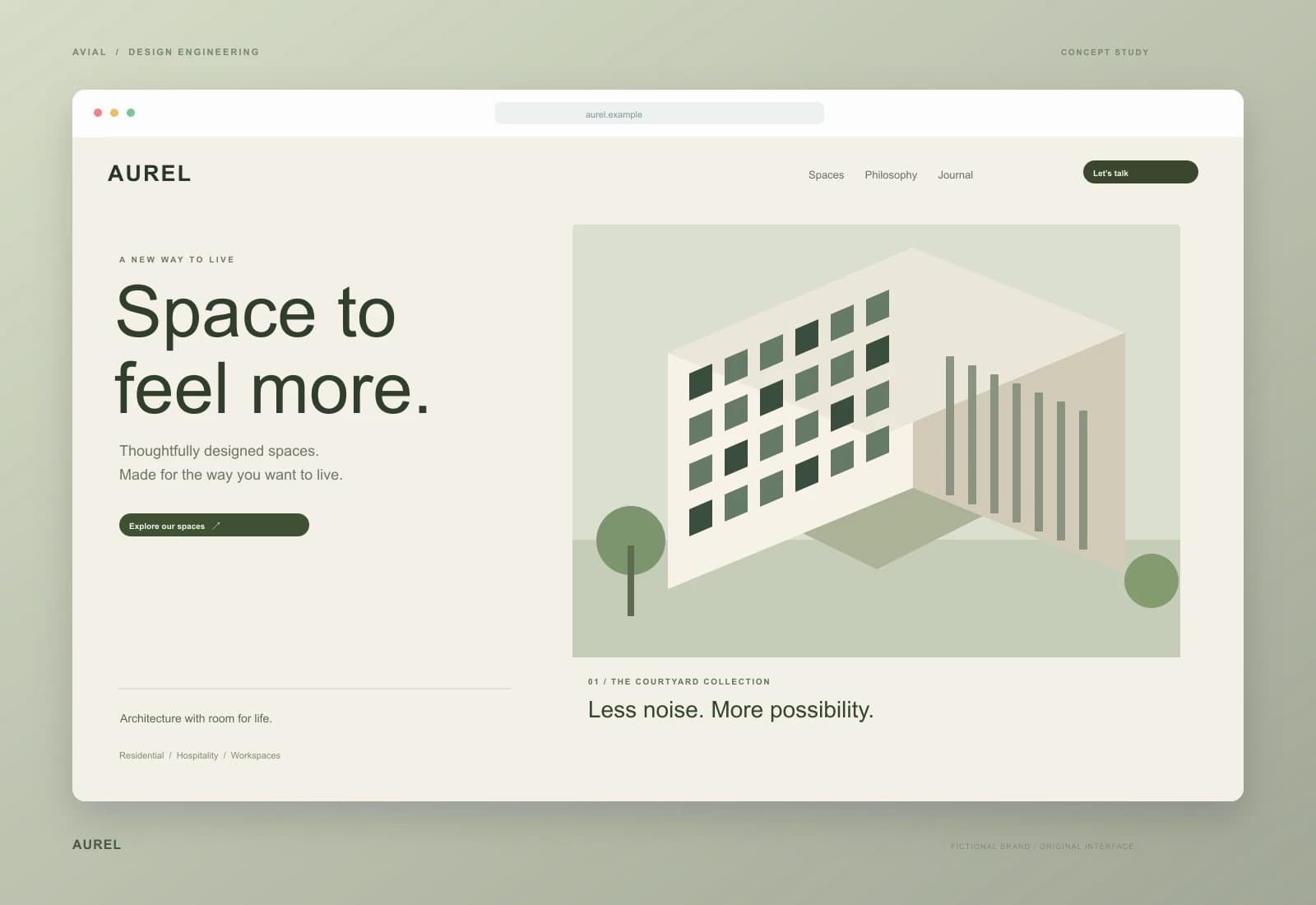
Architecture worth exploring
An architecture studio concept with immersive project stories, a curated space catalogue and a clear route from inspiration to a project brief. Modular publishing gives editors flexibility within a distinctive visual identity.
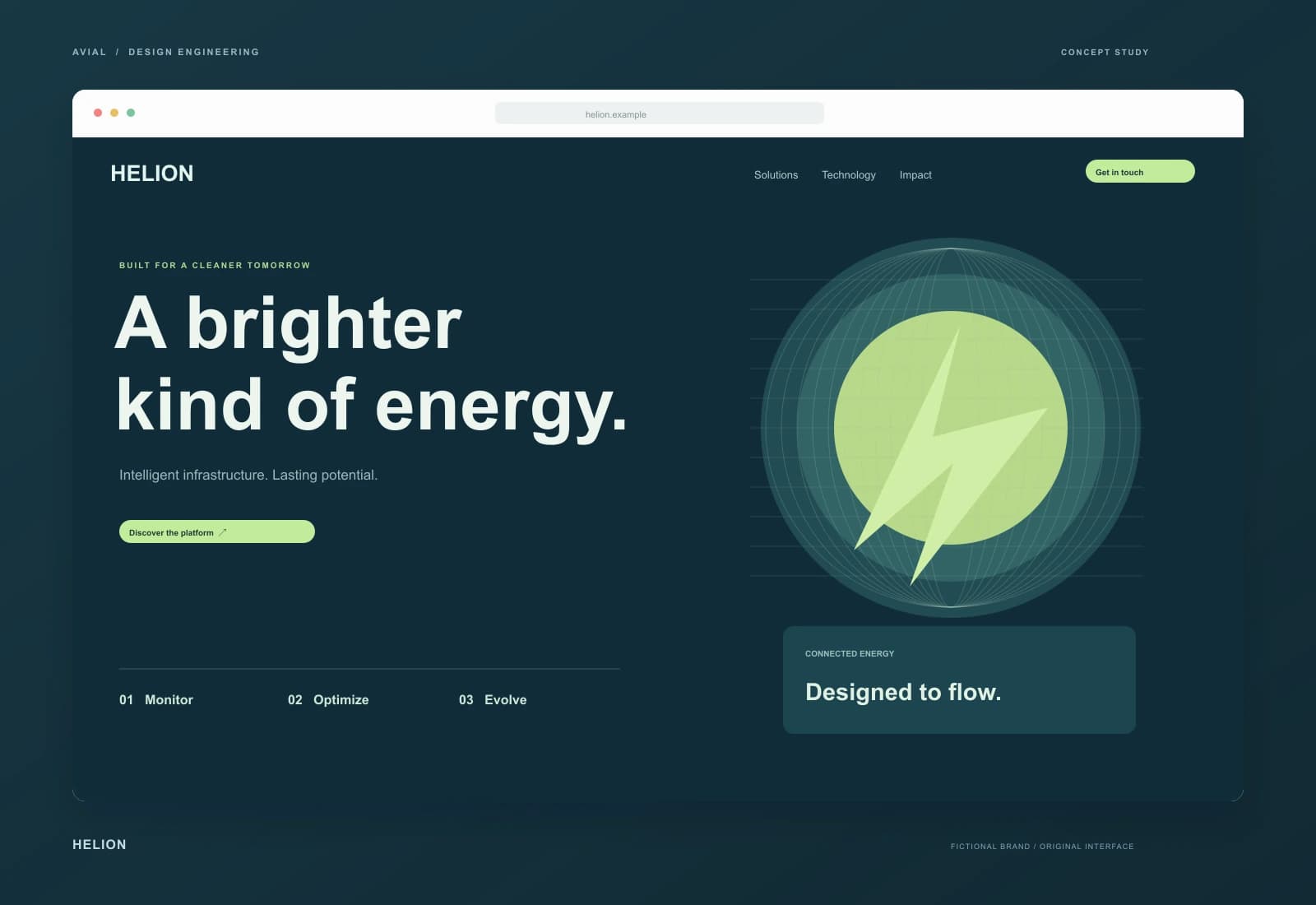
A digital home for cleaner energy
A corporate concept for an energy brand. Use-case journeys, a platform overview and a partner resource library turn complex infrastructure into an approachable product story.
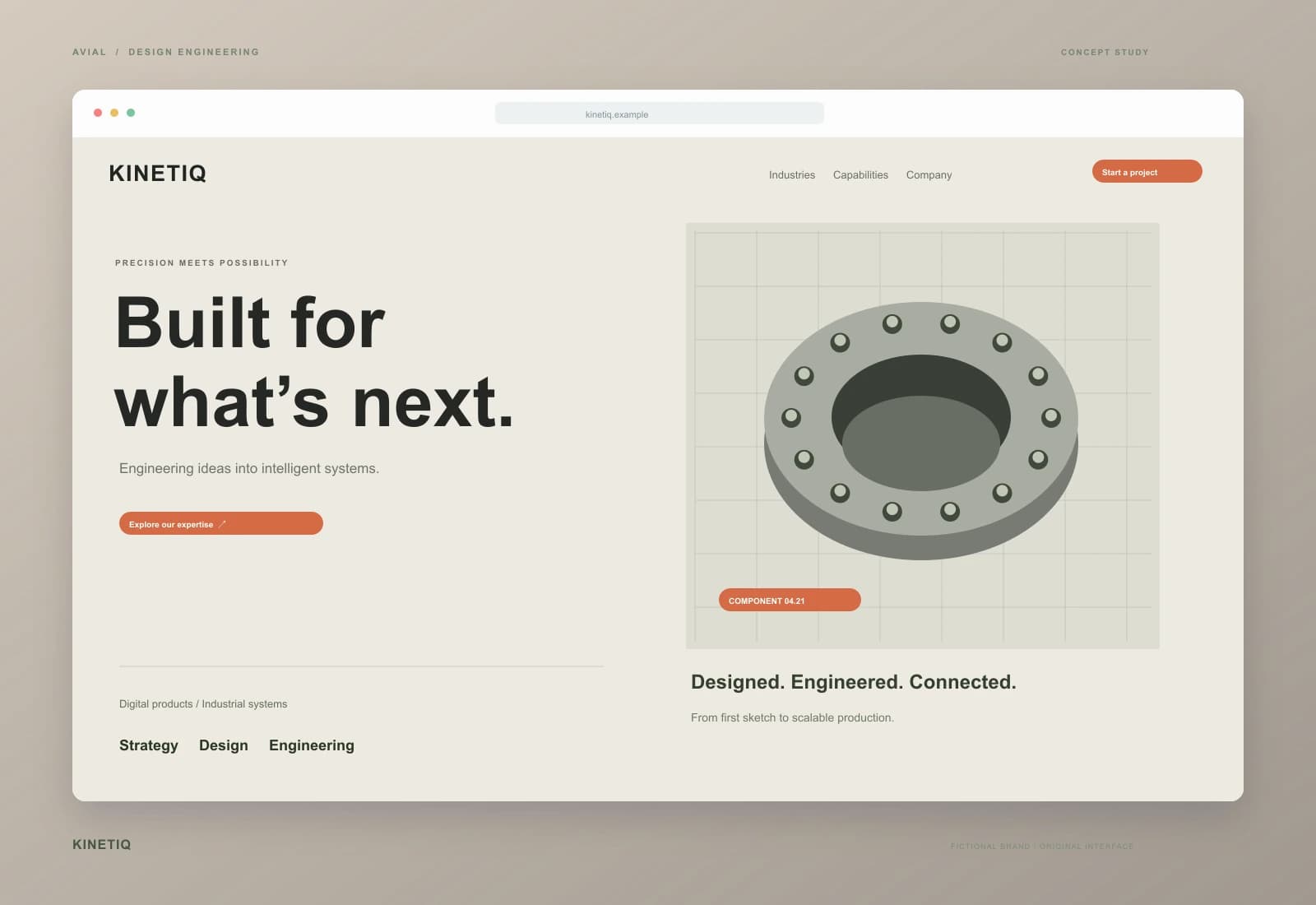
Precision engineering, digitally expressed
A B2B engineering concept that combines an industry-led journey with a technical catalogue. Quote requests carry specifications, attachments and project context directly into the sales workflow.
Original concepts for fictional brands, illustrating our approach to design and implementation.
What you get
Map the audience and pages, then validate the main journeys before visual design.
Create a visual system, responsive layouts and complete states for forms, menus and interactive elements.
Build the interface, CMS, forms, portals and agreed connections to your business systems.
Check core devices and journeys, prepare editor instructions and agree the launch plan.
We consider more than the homepage: finding information, mobile navigation, form errors and editorial workflows all matter. These details shape the company’s first impression and the team’s everyday experience.
Help visitors compare offers, understand terms and send an enquiry. Plan language versions, service pages, portfolio content and editing workflows around your actual materials.
Scope the catalogue, search, filters, basket, payment and fulfilment. Stock handling, product variants and integrations need their own requirements: page count alone does not describe complexity.
Define roles, data and workflows for orders, documents, approvals or self-service. Start with a testable first release. A native mobile application is a separate scope if your project needs one.
Receive a page map, core journeys, clickable prototype and acceptance criteria. Agree who supplies copy, translations and imagery before missing materials become a launch dependency.
Responsive layouts include loading and error states, editable sections, forms and agreed connections. Technology choices follow maintainability, integration and budget requirements, with third-party costs made explicit.
Verify agreed devices and journeys, document deployment and train editors. A replacement website includes a URL migration map and rollback plan. Ongoing support has its own agreed scope.
Illustrative scenarios for a specification, not client project results. Supported browsers, constraints and expected outcomes are agreed before implementation.
| User journey | Implementation | Acceptance check |
|---|---|---|
| A mobile enquiry | Validated form with confirmation | The enquiry reaches its destination; a repeated click does not duplicate it |
| A service update | CMS fields and preview | An editor changes copy and imagery without developer assistance |
| An old page link | URL map and redirects | The visitor reaches the relevant replacement without a redirect loop |
Estimates account for page types, journeys, permissions, languages, integrations and data migration. Separate the first release from later phases, and development from content, hosting, licences and maintenance. Requests beyond the approved scope receive a new estimate.
Timing depends on access, materials and review turnaround. Working versions are reviewed during delivery rather than only at launch. Share your current website, essential functions and the main action a visitor should complete to start the estimate.
Check mobile journeys, keyboard navigation, field labels, contrast and understandable error messages. Agree accessibility requirements and manual checks explicitly: an automated score does not establish full WCAG conformance.
The technical SEO baseline covers agreed metadata, indexability, canonicals, language links and sitemaps. Measure speed under defined conditions and conversions through agreed analytics. Release readiness and commercial growth require different evidence and observation periods.
From brief to launch
Agree the audience, objectives and first-release scope.
Review prototypes and design against real user journeys.
Deliver in stages with reviewable working versions.
Verify forms, measurement and content, then train the editors.
Before we start
Yes. After reviewing the code and goals, we can improve the current system, rebuild specific sections or replace outdated parts in stages.
Your editor can work through the CMS. We agree which sections must be editable and demonstrate that workflow before handover.
The estimate follows page scope, user journeys, integrations and content requirements. The brief separates the essential first release from later improvements.
The proposal identifies client-supplied materials and any commissioned content. Agree image rights and who verifies business claims and specialist facts.
The contract defines rights and handover. Plan for client-controlled repositories, domains and accounts; third-party components retain their own licences.
Yes. Prioritise one core journey and its necessary roles and integrations, with later work in a separate backlog. An MVP still needs quality and acceptance criteria.
Inventory important URLs, content and metadata. Agree redirects, verify language versions and monitor release errors. Unchanged search traffic cannot be guaranteed.
Technical preparation is specified in the development scope. Ongoing search strategy, new editorial content and external publications are separate services.
Use a sandbox where the provider supports one. Check success, rejection, repeated events and connectivity failures; production cutover requires an agreed plan.
Receive instructions and an account inventory. Defect resolution, support hours and new functionality have separate terms; unlimited maintenance is not assumed.
AVIAL SERVICE
Share your current website or the idea behind the next one. We will help define the first release and design direction.
Describe your goal and current setup. We will clarify scope, costs and a first phase. An enquiry does not commit you to a purchase.
Estimate IT service costs, book a consultation and try an enquiry automation example. Use the website check to start a discussion about technical SEO and page speed.